Dictatorship Dialogues

Explore early-20th-century dictatorships through concrete cases. Compare past dynamics with present-day parallels to understand power, ideology, and governance.
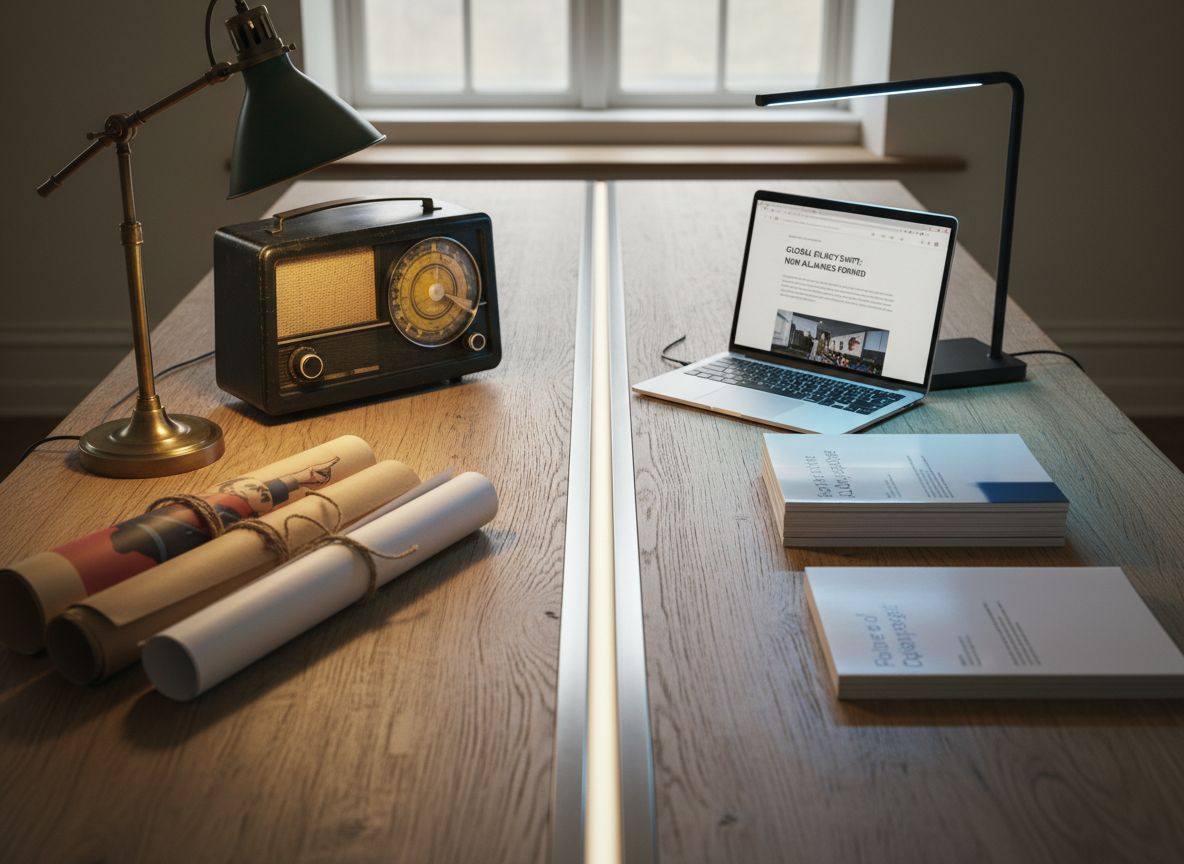
A heavy oak table is divided down the center by a narrow metal inlay line, symbolizing a timeline. On the left side, there are vintage artifacts: a crackled black radio, a stack of propaganda posters rolled and tied with twine, and a tarnished brass desk lamp. On the right, sleek modern objects: a thin laptop showing a political news site, a stack of glossy policy reports, and a minimalist LED desk lamp. Soft overcast window light from the left mixes with cooler artificial light from the right, subtly emphasizing the temporal divide. The mood is analytical and slightly tense. Photographic realism, shot from a slightly elevated angle with medium depth of field, highlighting the contrast between authoritarian communication tools of the past and today’s media landscape.

Meet Our Historians

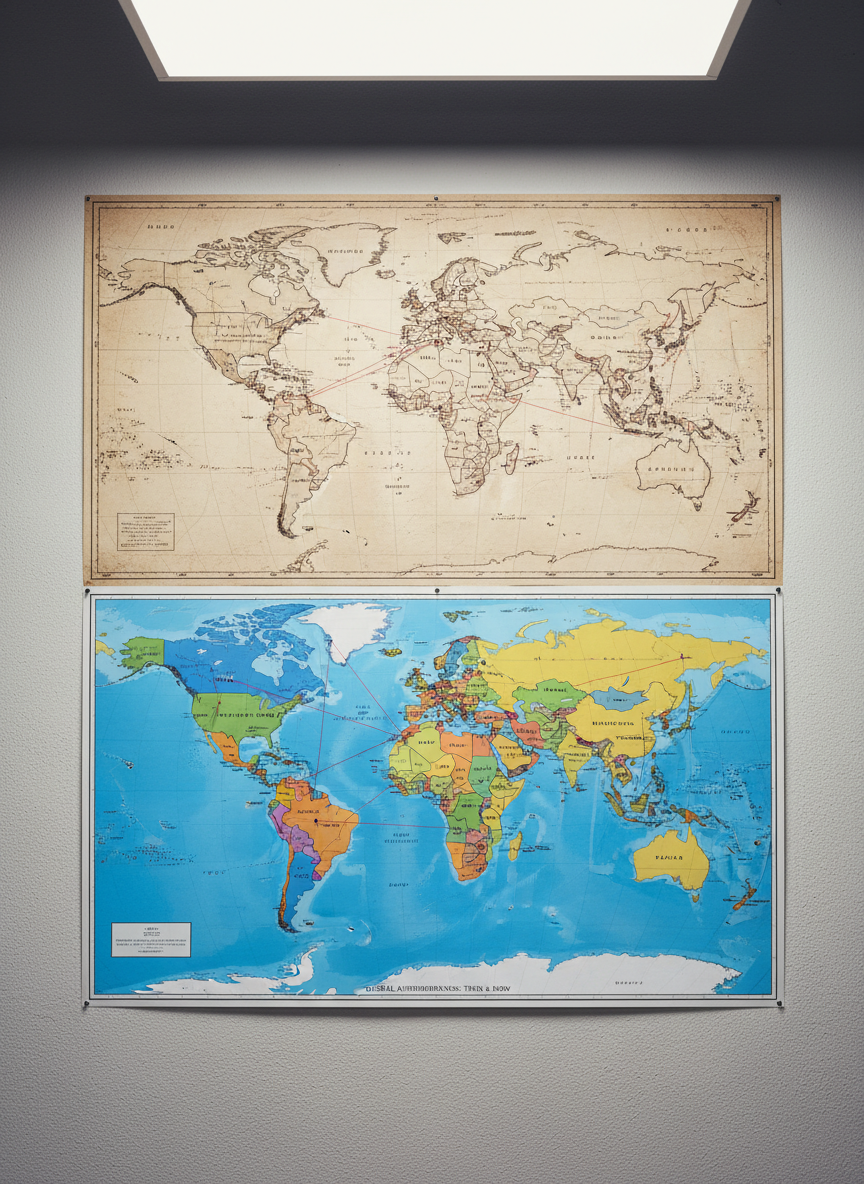
A meticulously detailed world map divided into two horizontal halves hangs on a neutral wall. The upper half shows a faded, sepia-toned map labeled with early-20th-century borders and capital cities, while the lower half presents a vivid, full-color modern political map with updated boundaries and symbols. Thin red strings and tiny metal pins connect specific regions across time, creating a web of comparisons. Overhead, cool diffused studio lighting evenly illuminates the map, revealing paper grain and pin shadows. The mood is investigative and scholarly. Photographic realism, captured straight-on with sharp focus across the entire frame, creating a clean, documentary-style composition ideal for a political history website about parallels between dictatorships then and now.

Aarav Sharma

CEO

A dimly lit archival room with long metal shelves stretching into the distance, filled with uniform gray document boxes labeled with years from 1900 to the present. In the foreground, one box is pulled out and open on a steel table, revealing neatly stacked files labeled with names of early-20th-century regimes. Beside it rests a transparent acrylic folder containing printouts of contemporary political data and charts. A single overhead fluorescent light casts a cool, clinical glow, creating sharp shadows and emphasizing the textures of cardboard, paper, and metal. The mood is serious and forensic, suggesting deep investigation. Photographic realism, shot with a vanishing-point composition down the aisle, drawing the eye from the focused foreground documents to the receding shelves of untapped historical evidence.

Mateo García

CTO

A heavy oak table is divided down the center by a narrow metal inlay line, symbolizing a timeline. On the left side, there are vintage artifacts: a crackled black radio, a stack of propaganda posters rolled and tied with twine, and a tarnished brass desk lamp. On the right, sleek modern objects: a thin laptop showing a political news site, a stack of glossy policy reports, and a minimalist LED desk lamp. Soft overcast window light from the left mixes with cooler artificial light from the right, subtly emphasizing the temporal divide. The mood is analytical and slightly tense. Photographic realism, shot from a slightly elevated angle with medium depth of field, highlighting the contrast between authoritarian communication tools of the past and today’s media landscape.

Zuri Ndlovu

Developer

A meticulously detailed world map divided into two horizontal halves hangs on a neutral wall. The upper half shows a faded, sepia-toned map labeled with early-20th-century borders and capital cities, while the lower half presents a vivid, full-color modern political map with updated boundaries and symbols. Thin red strings and tiny metal pins connect specific regions across time, creating a web of comparisons. Overhead, cool diffused studio lighting evenly illuminates the map, revealing paper grain and pin shadows. The mood is investigative and scholarly. Photographic realism, captured straight-on with sharp focus across the entire frame, creating a clean, documentary-style composition ideal for a political history website about parallels between dictatorships then and now.

Leila Haddad

Designer

A dimly lit archival room with long metal shelves stretching into the distance, filled with uniform gray document boxes labeled with years from 1900 to the present. In the foreground, one box is pulled out and open on a steel table, revealing neatly stacked files labeled with names of early-20th-century regimes. Beside it rests a transparent acrylic folder containing printouts of contemporary political data and charts. A single overhead fluorescent light casts a cool, clinical glow, creating sharp shadows and emphasizing the textures of cardboard, paper, and metal. The mood is serious and forensic, suggesting deep investigation. Photographic realism, shot with a vanishing-point composition down the aisle, drawing the eye from the focused foreground documents to the receding shelves of untapped historical evidence.

Hiroshi Tanaka

Marketing

A heavy oak table is divided down the center by a narrow metal inlay line, symbolizing a timeline. On the left side, there are vintage artifacts: a crackled black radio, a stack of propaganda posters rolled and tied with twine, and a tarnished brass desk lamp. On the right, sleek modern objects: a thin laptop showing a political news site, a stack of glossy policy reports, and a minimalist LED desk lamp. Soft overcast window light from the left mixes with cooler artificial light from the right, subtly emphasizing the temporal divide. The mood is analytical and slightly tense. Photographic realism, shot from a slightly elevated angle with medium depth of field, highlighting the contrast between authoritarian communication tools of the past and today’s media landscape.

Amara Okafor

Social

A meticulously detailed world map divided into two horizontal halves hangs on a neutral wall. The upper half shows a faded, sepia-toned map labeled with early-20th-century borders and capital cities, while the lower half presents a vivid, full-color modern political map with updated boundaries and symbols. Thin red strings and tiny metal pins connect specific regions across time, creating a web of comparisons. Overhead, cool diffused studio lighting evenly illuminates the map, revealing paper grain and pin shadows. The mood is investigative and scholarly. Photographic realism, captured straight-on with sharp focus across the entire frame, creating a clean, documentary-style composition ideal for a political history website about parallels between dictatorships then and now.

Trusted by scholars.

— Aya Nakamura