
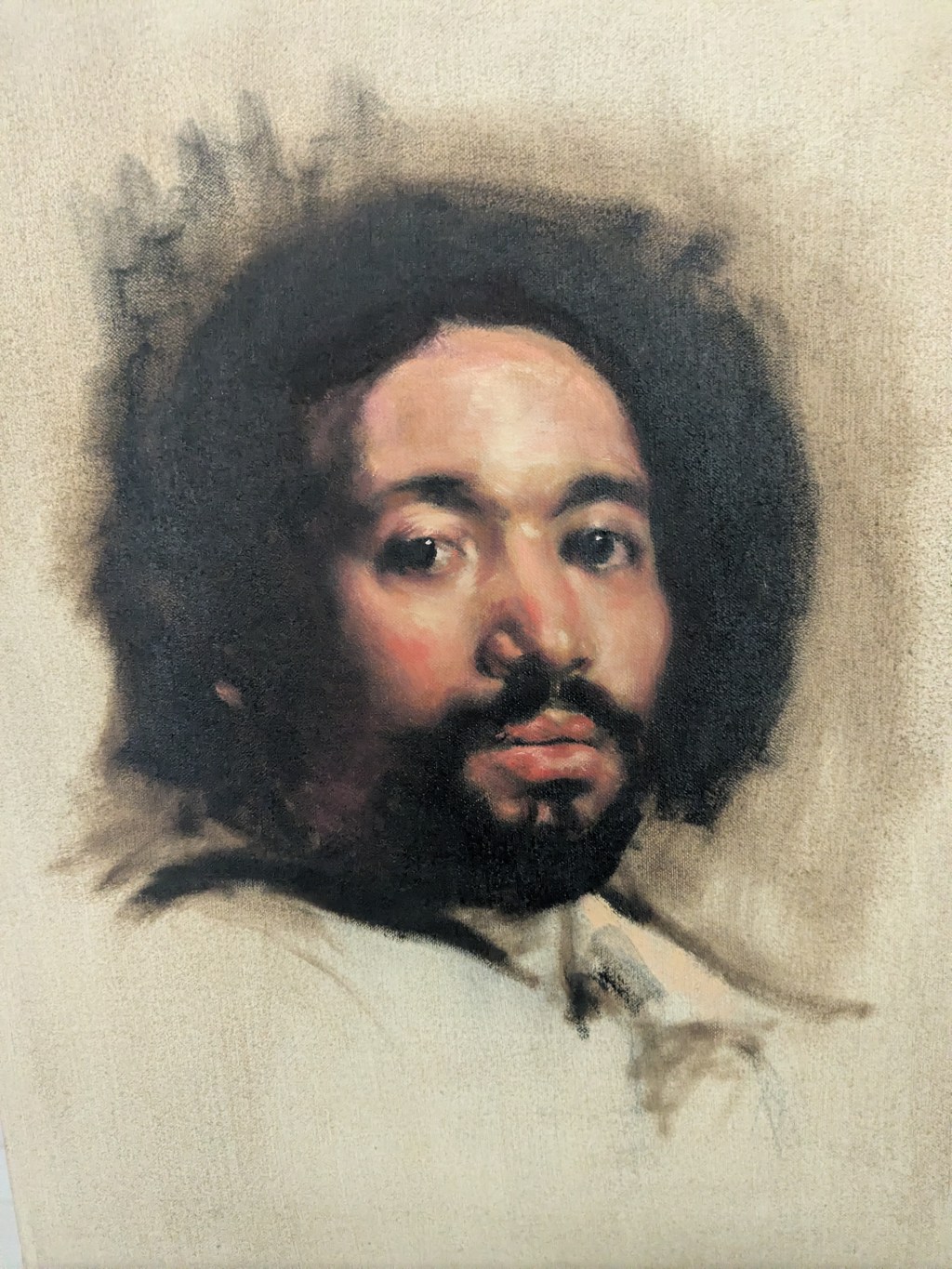
For years, I thought Velasquez, the famous Spanish artist, had a gifted painter as his paid apprentice and helper. That assumption seemed reasonable — until I began digging deeper into the historical record.
The painting shown above and on my Home page is an oil-on-canvas study I made while attending classes at the Art Students League of New York in the late 1980s. I posted it because it relates to various forms of slavery and ethics of ownership discussed in my book Parallels. In fact, the book’s title refers to historic parallels between past and present systems of oppression.
My study shows only the head-and-face portion of the original painting, which is described in the following Wikipedia article:
“The Portrait of Juan de Pareja is a painting by Spanish artist Diego Velasquez of the enslaved Juan de Pareja, a notable painter in his own right, who was owned by Velasquez at the time the painting was completed. Velasquez painted the portrait in Rome, while traveling in Italy, in 1650. It is the earliest known portrait of a Spanish man of Moorish descent.”
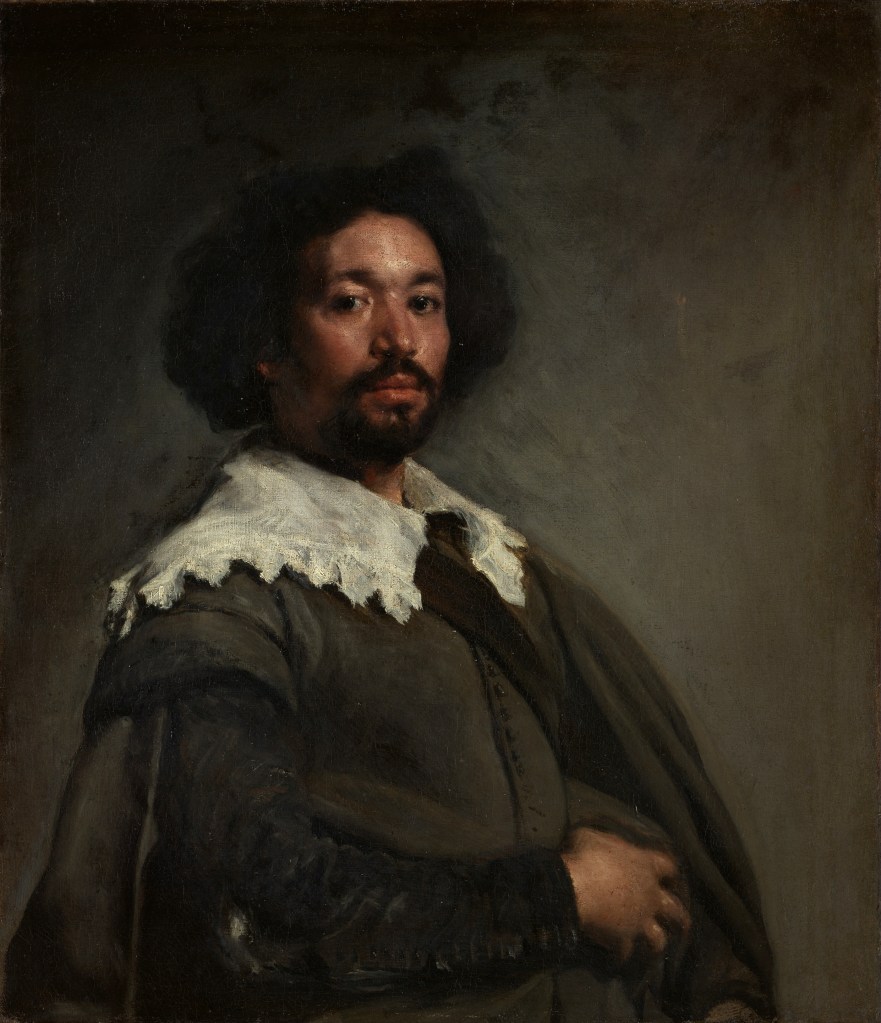
The article includes an illustration of the original portrait. Acquired by the Metropolitan Museum of Art in New York City in 1970, the portrait was the first to sell for more than $1 million.
In a Museum publication printed at the time I made the study, the writer described Pareja simply as an “assistant to Velasquez,” not as his slave. The more specific description in the Wikipedia article may reflect a modern shift toward more accurate terminology. I assume that the term “slave” means that Pareja was purchased by the artist, possibly paid an allowance, provided with living quarters, etc.
“Indentured Servant” for Life Equals Slave
Since he was also a gifted painter (try searching online for his paintings), he probably benefited from the tutelage of his famous master. However, he was not free to terminate the relationship with Velasquez. If I understand the legal definition of slavery, he would have been liable to punishment, possibly death, if he tried to escape. That threat would still have applied even if he was happy in the relationship, so he lived in the knowledge that he was a piece of property.
At least, these were my assumptions until I learned more at drrstemp.com. Richard Stemp’s blogs on art history include one on Pareja. It turns out that Velasquez’ assistant wasn’t a legally designated “slave” but rather an indentured servant with a period of servitude limited to twenty years. However, his master was so dependent on Pareja’s skills of pigment-grinding, brush-cleaning and studio-tidying that he had the servant’s period of indenture extended another four years beyond the original term. According to Stemp, Pareja was never granted freedom because he was handed off to other masters after Velasquez’ death and remained a slave until his own death in 1670.
A compelling story that explores legalized slavery under another name. For modern-day parallels and deeper insight into these themes, visit my News page.
And please be sure to leave a comment below.
 parallelsversusdictators.org
Leave a comment